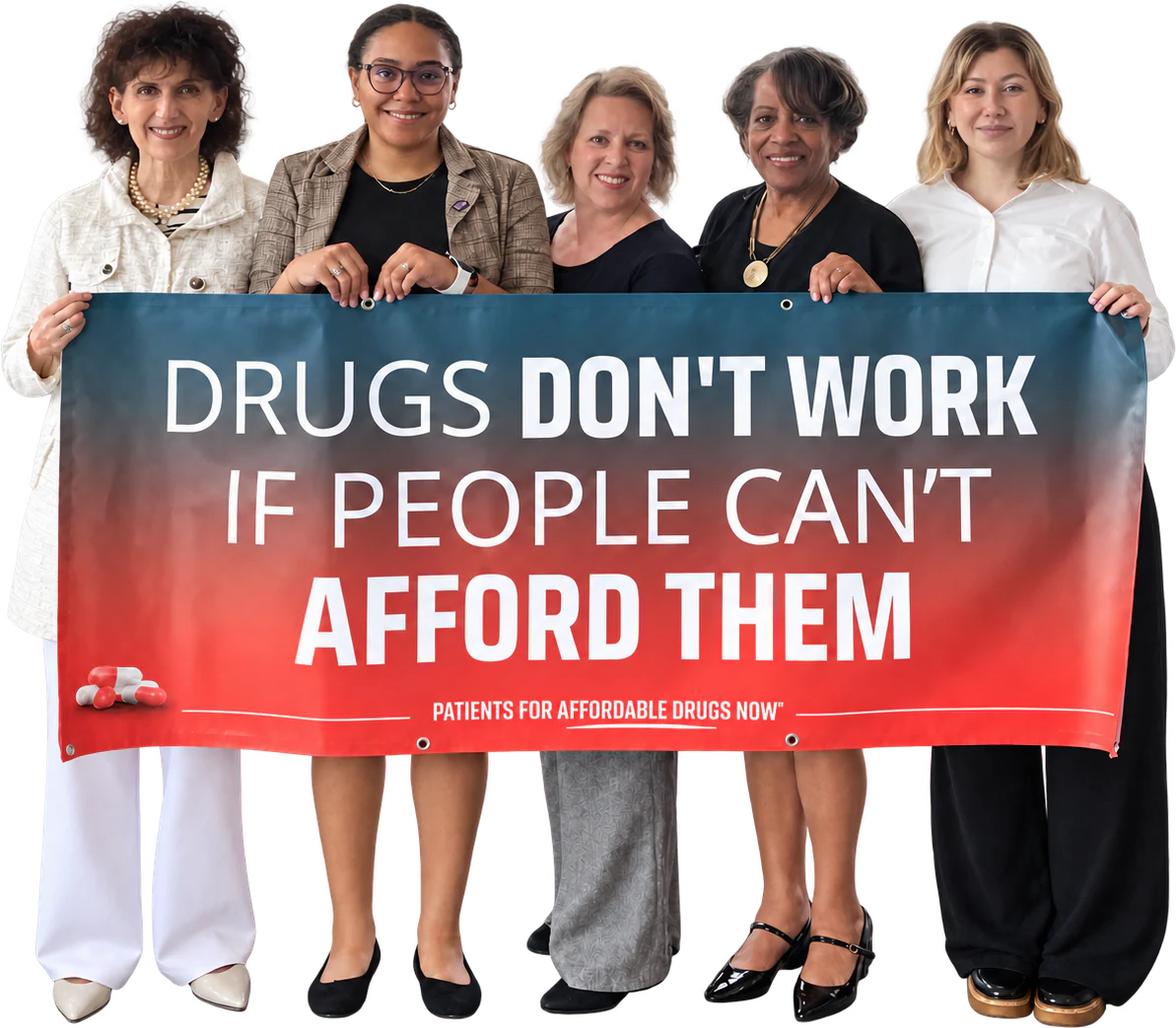
WASHINGTON, D.C. — Yesterday, Patients For Affordable Drugs Now CEO Merith Basey testified before the Senate Judiciary Committee, urging Congress to advance bipartisan legislation before the end of the year to curb pharmaceutical industry abuses of the patent system, increase competition, and lower prescription drug prices for patients and taxpayers.
Throughout the hearing, senators from both parties highlighted bipartisan proposals to address barriers to generic and biosimilar competition, while Basey emphasized the urgent need to close loopholes that allow drug companies to maintain monopolies at the expense of Americans.
Hearing Highlights
P4AD CEO Merith Basey’s Opening Testimony: Merith highlighted how patent abuses delay competition and keep prices high for American patients. She shared the experiences of patient advocate Kevin Baker and P4ADNow founder David Mitchell to underscore why patients need both innovation and affordability. Watch the full video here.
Senate Judiciary Committee Chair Chuck Grassley (R-IA) and Merith Basey on Advancing Drug Competition Bills: Chairman Grassley highlighted the bipartisan work to vote six drug pricing bills favorably out of Committee, noting that one of the bills has passed the Senate so far. Merith emphasized that passing all into law would close loopholes that delay competition and deliver savings for patients and taxpayers. Watch the full video here.
Sen. Klobuchar (D-MN) and Merith Basey on Expanding Medicare Negotiation: Sen. Klobuchar recognized P4AD founder David Mitchell’s instrumental role in securing Medicare drug price negotiation and other reforms, and asked Merith about expanding the program. Merith emphasized that negotiating prices for more drugs would deliver greater savings to more patients. Watch the full video here.
Sen. Lee (R-UT) and Merith Basey on Advancing Bipartisan Reforms to Bring Biosimilars to Market: Sen. Lee highlighted his P4ADNow-endorsed bill to remove barriers to biosimilar access and asked Merith what else Congress should prioritize. Merith emphasized the need to tackle patent thickets, pay-for-delay deals, and sham citizen petitions as Congress considers reforms before year-end. Watch the full video here.
Sen. Welch (D-VT) and Merith Basey On Patent Thickets: Sen. Welch highlighted the ETHIC Act and asked how drug companies exploit the patent system. Merith explained how overlapping patents delay generic competition, pointing to Symbravo’s nearly identical patents for “pain relief” and “pain freedom” as an example. Watch the full video here.
Watch the full hearing “Prescribing Sunshine: How Competition & Transparency Lowers Prescription Drug Costs” here. Basey’s written testimony is available here, and her oral remarks are below.
———————————————————————————————————————–
Oral Testimony of Merith Basey
Chairman Grassley, Ranking Member Durbin, and members of the Committee. Thank you for inviting me to testify.
I am here on behalf of the one in three Americans struggling to afford their prescription drugs, and to urge Congress to pass bipartisan reforms that will increase competition and lower drug prices.
My name is Merith Basey, and I am the CEO of Patients For Affordable Drugs, the only national patient advocacy organization focused exclusively on policies that lower prescription drug prices.
We are bipartisan and do not accept funding from any organization that profits from the development or distribution of prescription drugs.
Founded nearly a decade ago by cancer patient David Mitchell, we have heard from tens of thousands of patients from across all 50 states and every congressional district. Despite their different backgrounds and medical conditions, they are united by a common experience: they are struggling to afford the medicines they need.
On behalf of those patients, I want to leave this Committee with three points.
First, patients are paying the price of a system rigged against them.
Americans pay, on average, at least four times more than people in other high-income nations for the same brand-name prescription drugs.
For families across the country, this is more than a financial burden. It’s a health crisis that shapes every aspect of their lives.
Patients are rationing medications, draining their life’s savings, and working multiple jobs just to afford their prescriptions. And even then, some are forced to go without the medicines they need.
And Americans understand that pharmaceutical companies bear the primary responsibility for those high prices.
Second, drug companies exploit loopholes in our patent and regulatory systems to delay lower-cost competition and keep prices high.
Our patent system was designed to reward genuine invention and encourage the development of lifesaving, novel treatments. But that bargain comes with a fundamental expectation: when legitimate monopoly protections end, competition should begin.
But drug manufacturers manipulate the system to prevent the market from working as intended.
They build walls of overlapping patents around existing medicines. They move patients onto slightly modified products as generics approach. They strike agreements that keep competitors off the market and exploit regulatory processes intended to protect patients.
The result is the same: less competition, longer monopolies, and higher prices.
Take Kevin, a young man in Oregon, living with Crohn’s disease. He relies on Rinvoq, a drug with a list price of more than $7,000 per month.
He told us, “I have to choose between food and medication.”
He struggles to access treatment consistently and, as a result, has never experienced full remission.
Rinvoq is protected by overlapping patents that delay competition from more affordable alternatives. For Kevin, the stakes are not abstract. Competition could bring down the price of the medicine he depends on. But until that competition arrives, he and millions of other Americans will keep paying higher prices for longer.
Third, Congress can restore balance to the system
The bipartisan bills that are the focus of today’s hearing address systemic abuses by big drug companies and help restore balance, protecting genuine innovation while removing unnecessary barriers to competition. Competition is one of the most powerful tools to lower drug prices. When one generic enters the market, prices can drop by up to 39%, and with six or more competitors, prices can fall by up to 95%.
These bills limit patent thickets, curb pay-for-delay deals, crack down on product hopping, and deter the abuse of FDA citizen petitions.
The choice is not between innovation and affordability. Patients need both.
The founder of Patients For Affordable Drugs, David Mitchell, understood firsthand the importance of this balance.
For 15 years, innovative medicines kept David alive with multiple myeloma, at more than $20,000 a year out-of-pocket. In January, those breakthrough options ran out, and David died.
Congress has both an opportunity and responsibility to stand with the nine in ten Americans who want action to lower drug prices.
Passing these common-sense, bipartisan reforms before the end of the year would make the drug price system work better for the patients and taxpayers it was intended to serve – not those exploiting it.
Thank you, and I look forward to your questions.
###
Patients For Affordable Drugs Now is the only national, patient advocacy organization focused exclusively on policies to lower drug prices. We empower and mobilize patients and allies, hold accountable those in power, and fight to shape and achieve system-changing policies that make prescription drugs affordable for all people in the United States. P4ADNow is bipartisan and does not accept funding from organizations that profit from the development or distribution of prescription drugs. To learn more, visit: PatientsForAffordableDrugsNOW.org