The Week in Review in Prescription Drug Pricing: Amgen’s New DTC Program, Another Pharma Court Loss, Colorado News, P4AD at IRA Conference, and more
Welcome to the Week in Review.
Amgen Follows Pfizer — What That Means For Patients
Nearly two weeks after President Trump’s TrumpRxannouncement, Amgen unveiled its own direct-to-consumer (DTC) program, announcing a discounted price for its cholesterol drug, Repatha, at $239 per month, which the company says is “nearly 60% lower than the current U.S. list price.” This is the latest move as drug manufacturers race to align with the administration’s pressure campaign. But while framed as progress, these piecemeal discounts underscore the limits of voluntary action: $239 a month remains impossible for many patients, and Repatha is only one of the dozens of drugs Amgen sells at high prices. Real affordability will require systemic reforms – not temporary, corporate-driven programs that leave patients dependent on goodwill. — [White House, Amgen, STAT News, POLITICO, Endpoints News, Reuters]
Big Pharma’s Legal Campaign Continues
Pharma’s courtroom losing streak continued this week, marking the industry’s 15th defeat. On Monday, the U.S. Court of Appeals For The Third Circuit unanimously rejected Novo Nordisk’s challenge to the Medicare Negotiation Program, dismissing claims that the law violates the First and Fifth amendments. The next day, the Fifth Circuit heard oral arguments in PhRMA’s lawsuit, where the government’s lawyer faced sharp questioning from one judge who appeared sympathetic to PhRMA’s position. The panel’s other two judges were more measured, one even noting the absence of any amicus briefs supporting PhRMA, compared to several backing the government. The court may wait for related filings in the upcoming Supreme Court case before ruling, but the trend remains clear: Pharma continues to challenge Medicare’s authority to negotiate, and patients’ advocates continue to defend it. — [P4AD, U.S. Court of Appeals, U.S. Court of Appeals]
Colorado Becomes First State to Cap the Price of a Prescription Drug
Colorado patients and advocates scored a major victory this week as the state’s Prescription Drug Affordability Review Board (PDAB) set the nation’s first price cap on a prescription drug, limiting the cost of Enbrel to $600 per weekly dose. This milestone was years in the making — and it happened because patients spoke up. P4AD patient advocates in Colorado supported the effort, sending letters and sharing their stories to illustrate the need for reform. Enbrel, approved more than 25 years ago, has seen its price rise by more than 1,500% and is protected by at least 57 separate patents that block generic competition. As expected, manufacturer Amgen and the broader industry are threatening lawsuits and reviving familiar claims about “innovation.” But with $3.2 billion in annual sales, Amgen has long recouped its investment — this fight is about protecting profits, not progress. — [Denver 7, Washington Post, Colorado Sun]
P4AD Defends Patients’ Voices at GW Law’s IRA Conference
Executive Director Merith Basey joined GW Law’s Inflation Reduction Act conference for a panel focused on the law’s most pressing questions, threats, and challenges around drug pricing. In a room dominated by industry representatives and economists, Merith made sure patients’ voices were heard – pushing back when affordability was dismissed and reminding the audience that these policies aren’t theoretical, but affect real people. While much of the discussion rehashed the same tired industry arguments about innovation and investment, Merith cut through the noise – emphasizing that it’s about balance and patients need both. As she noted, our founder, David Mitchell’s story (who lives with a rare blood cancer) shows that innovation is essential, but it means nothing if patients can’t afford it. — [GWU]
In Case You Missed It
Senators Grassley (R-IA) and Hassan (D-NH) reintroduced the bipartisan Open Payments Expansion Act, which would reveal the financial ties between drug companies and the tax-exempt patient advocacy groups they fund. As P4AD’s Hidden Hand reports have shown, these front groups often claim to represent patients while defending drug industry interests. The bill would bring long-overdue transparency to those relationships — ensuring lawmakers and the public can see who’s really behind campaigns that seek to undermine drug pricing reform. — [Sen. Grassley, P4AD]
Patient Advocate Spotlight: Janet Kerrigan Background: Retired critical care nurse living in Myrtle Beach, SC
Condition: Multiple Myeloma, an incurable blood cancer
Drug: Revlimid ($800 per daily capsule, or $24,000 in monthly copays)
In her words: “I relied on grants to help cover these astronomical expenses, and the uncertainty of their availability meant living in a constant state of worry, wondering if the drugs that were keeping me alive would be covered… No one should have to face bankruptcy or fear losing access to life-saving medications.”
This week, Janet spoke with the New York Post about her struggles with high drug prices and President Trump’s recent DTC announcements. You can read the full article here.
Another Patient Victory: Federal Court Rejects BMS and Janssen’s Case Against Medicare Negotiation
Yesterday morning, the U.S. Court of Appeals For The Third Circuit rejected Bristol Myers Squibb (BMS) and Janssen’s challenge to the Medicare Drug Price Negotiation Program. This latest decision marks the 13th ruling in favor of the program, following pharma’s three legal defeats over just 48 hours in August. Once again, a federal court has found that the program is constitutional, that drugmakers are not being coerced, and that participation in Medicare is voluntary. P4AD submitted an amicus brief on behalf of patients in this case as part of our ongoing work to stand against pharma’s multi-pronged legal campaign and to ensure patients are represented inside and outside the courtroom. — [P4AD, IP Watchdog, P4AD, P4AD, POLITICO, Bloomberg Law, Endpoints News]
Pharma Continues to Shatter Lobbying Records
In 2024, the pharmaceutical industry spent a record $388 million on lobbying. This year, they’re on track to shatter that record again — already pouring $227 million into federal lobbying in just the first half of 2025, and the spending isn’t slowing down. Just two weeks ago, four major drug manufacturers joined together to launch a brand new lobbying group aimed squarely at undermining Medicare negotiation. As the year goes on, we anticipate even more spending from the industry on their never-ending influence campaign as they work to claw back patient progress. — [Sludge, Open Secrets, STAT News]
For PBMs, Government Scrutiny Continues
PBMs remain under scrutiny this week with the House Oversight Committee expanding its inquiry and Chair James Comer sending letters to Cigna and UnitedHealth’s OptumRX about efforts “to evade transparency and oversight” in the U.S. At the same time the FTC is advancing a complaint against Cigna, OptumRX, and CVS’ Caremark, alleging anticompetitive practices related to inflated list prices for insulin drugs. PBMs profit from opaque “rebate” deals while offering little in the way of benefits to patients. Congress came close to enacting bipartisan PBM reform at the end of 2024, and there is still solid interest in getting those reforms signed into law. P4AD welcomed the FTC’s initial findings on PBMs’ harmful practices last July, and we’ll be watching closely to ensure that real transparency is brought to the PBM black box and that reforms will help lower drug prices for patients. — [House Oversight, Endpoints News, Roll Call, P4AD, FTC, Axios, Becker’s Hospital Review, Healthcare Finance]
ICYMI
Health Affairs published two new articles dissecting the harmfulORPHAN Cures Act and the impact of rare disease exemptions on the Medicare Negotiation Program: “Exemptions and delays to the negotiation of orphan drugs are poised to erode [Medicare negotiation] savings by more than previous analyses suggested,” and “the impact of exemptions and delays will grow.” — [Health Affairs, Health Affairs]
Patient Advocate Spotlight: Aarolyn McCullough
Condition: Diabetes
Drugs: Everolimus, Zortress, and Ozempic ($100, but would be $2,000 per month without coverage)
Background: Michigan resident and liver transplant survivor
In her words:
“I can thankfully afford [my prescriptions] due to manufacturer assistance and health coverage benefits I receive through my former employer: the United States Postal Service. But without such assistance, a situation which I have faced before in the past, I would be paying about $2,000 per month for all of my medications.”
“In these circumstances, I’ve either had to change prescriptions or cope with the fact that I may die, and that is a fact that runs constantly in my thoughts.”
“As a retired individual, this should not be my reality. As an American citizen, I believe we deserve lower cost prescription drugs because we are simply overpaying compared to the rate other countries pay for the same or equivalent medications.”
WASHINGTON, D.C. — Today, the Senate passed a reconciliation bill that includes a nearly $5 billion giveaway to the pharmaceutical industry: the ORPHAN Cures Act. This bill ignores the will of patients and undermines the historic and wildly popular Medicare negotiation program, ensuring patients will continue to pay high prices on drugs that should be negotiated. P4ADNow is now calling on the House to stand up for patients, protect the program that would lower costs for patients and taxpayers, and remove the ORPHAN Cures Act from the final package.
“The ORPHAN Cures Act is a betrayal of millions of patients on Medicare, and a completely unnecessary $5 billion giveaway to the pharmaceutical industry,” said Merith Basey, Executive Director of Patients For Affordable Drugs Now. “While nine in ten Americans are demanding Congress go further to lower drug prices, this decision moves us in the wrong direction, undermining hard-fought progress to lower drug prices. Pharma lobbyists will stop at nothing to maintain industry profits, and when a majority of the Senate caves to their interests, it’s a reminder to Americans why they’re paying the highest drug prices in the world. Simply put: it’s because Congress allows it. Once again, we call on the House to stand with patients against industry interest and remove ORPHAN Cures and its unnecessary pharma handouts immediately.”
The ORPHAN Cures Act would create a new loophole allowing some of the most profitable drugs with multiple orphan indications to avoid price negotiation under Medicare, even as they generate massive sales. The CBO estimates this carveout would cost taxpayers nearly $5 billion over the next decade while diminishing the popular and effective Medicare negotiation program that is poised to deliver savings to millions of seniors starting next year.
P4ADNow patient advocates have sent 17,215 letters to Congress, met with legislative offices, spoken out publicly, and talked to the media demanding lawmakers reject the ORPHAN Cures Act.
### Patients For Affordable Drugs Now, is the only national, patient advocacy organization focused exclusively on policies to lower drug prices. We empower and mobilize patients and allies, hold accountable those in power, and fight to shape and achieve system-changing policies that make prescription drugs affordable for all people in the United States. P4ADNow is bipartisan and does not accept funding from organizations that profit from the development or distribution of prescription drugs. To learn more visit; PatientsForAffordableDrugsNOW.org.
Welcome to the Week in Review.
Expanding Medicare Negotiation with the SMART Prices Act
The Strengthening Medicare and Reducing Taxpayer (SMART) Prices Act has been re-introduced by Senators Amy Klobuchar (D-MN) and Peter Welch (D-VT) — legislation that will expand Medicare price negotiation and strengthen HHS’ tools to lower prescription drug prices. One in three Americans can’t afford their prescription drugs, and we hear from patients every day who are rationing medication or skipping doses because of high drug costs. The SMART Prices Act builds on the 2022 prescription drug law’s historic drug price reforms by increasing the number of drugs subject to Medicare negotiation — a proposal that has broad support from Americans on both sides of the aisle. Patients For Affordable Drugs NOW endorses this legislation, and we support efforts to expand Medicare negotiation to secure a better deal for even more Americans. — [Senator Klobuchar, Senator Welch]
The administration’s “Most Favored Nation” (MFN) policy begins to take shape this week, with President Trump tapping CMS administrator Dr. Mehmet Oz to lead the negotiations process. Americans pay the highest drug prices in the world, and international reference pricing frameworks like MFN are worth exploring — but only if they’re done right. The policy must meaningfully lower prescription drug prices for U.S. patients, without driving up costs in other countries or creating new loopholes for drug companies to exploit. This also means a policy that’s developed in conjunction with Congress to ensure reference prices are enforceable and stand up to legal scrutiny. P4ADNow will continue monitoring as this policy develops. — [Endpoints News, BioSpace, JAMA Health Forum, Axios]
RFK Jr. vs. Big Pharma’s TV Ads
The U.S. and New Zealand are the only two countries in the world that allow direct-to-consumer (DTC) advertising by drug manufacturers. HHS Secretary RFK Jr. has long criticized this practice, and his renewed calls to ban pharma ads from TV gained fresh attention this week. Making matters worse, taxpayers are subsidizing these ads through a longstanding tax break that has allowed Big Pharma to flood the airwaves for years. Earlier this month, Senators Josh Hawley (R-MO) and Jeanne Shaheen (D-NH) introduced the bipartisan and P4ADNow-endorsed No Handouts for Drug Advertisements Act, which would eliminate that tax break — a common-sense step toward curbing pharma’s outsized influence. — [X.com, Bloomberg, Senator Hawley]
P4AD Report Exposes Pharma-Funded Groups Doing the Industry’s Bidding
As the fight to lower drug prices heats up on Capitol Hill, P4AD released a new report, The Rampant Reach of Pharma’s Hidden Hand, uncovering the pharmaceutical industry’s efforts to fund, influence, and in some cases, fully operate, front groups that claim to represent the interests of patients while working to protect drug company profits. The research is a continuation of P4AD’s multi-year investigation into pharma’s behind-the-scenes manipulation of public debate on drug pricing, building on our 2021 and 2023 reports with six new industry-backed organizations: the Alliance for Aging Research, the American Action Forum, the Center for Medicine in the Public Interest, the Council for Affordable Health Coverage, the Pacific Research Institute, and Seniors 4 Better Care. Each group claims to advocate for patients, but their real mission is clear: protect drug industry profits and delay or derail reforms that would bring prices down. If these groups truly advocated for patients, they’d listen when 90% of Americans demand more action to lower drug prices. — [P4AD Report, Arnold Ventures, Common Dreams, Truthout, The Lever]
Centering Patient Stories at CHCI
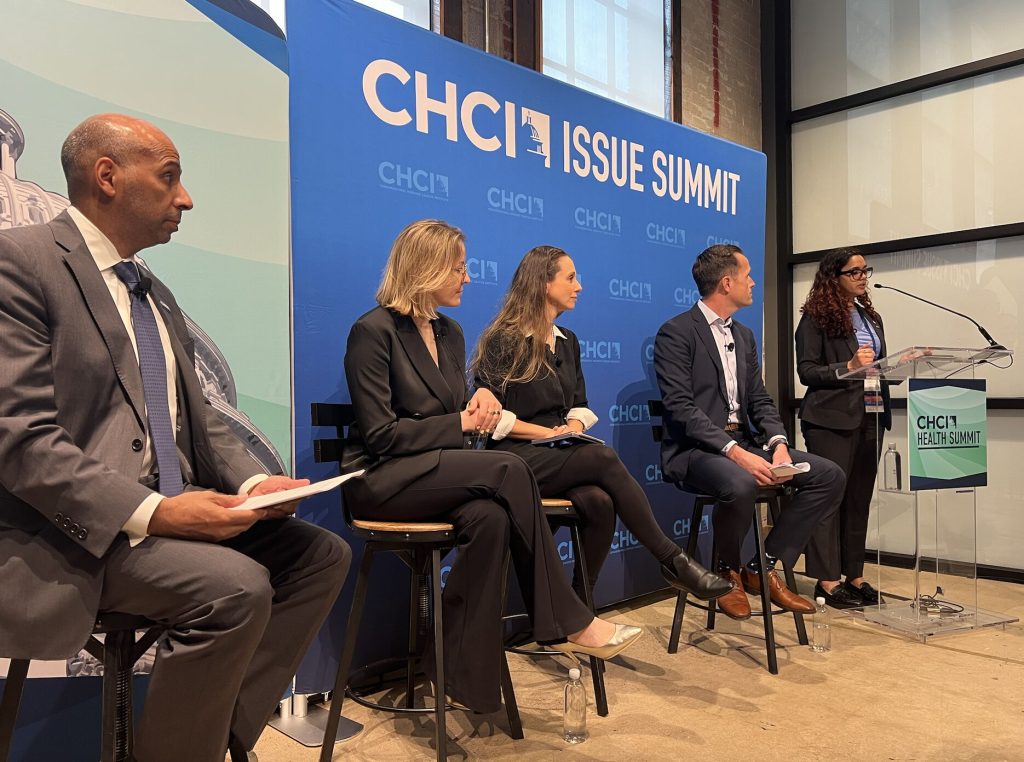
P4AD’s Executive Director, Merith Basey, joined the Congressional Hispanic Caucus Institute’s (CHCI) annual Health Summit to discuss reforms to improve prescription drug access among Latino communities and ensure patient stories were front and center. America is in the midst of a drug pricing crisis, and the panel, “Balancing Drug Affordability and Innovation: Ensuring Access While Advancing Research,” was a conversation with representatives from PhRMA and researchers on the reforms needed to fix a system rigged against patients. The pharmaceutical industry deserves to be held accountable for its role as the true driver of high prices, and Merith stood up for patients throughout the conversation. Innovation and affordability aren’t opposing forces, but with 29 million Americans now considered “cost-desperate” when it comes to their medication, it’s clear that we need to take real steps to rein in monopoly pricing, increase transparency, and expand Medicare negotiation. Drugs don’t work if people can’t afford them, and there’s no value in medical breakthroughs that patients can’t access. — [CHCI, Gallup]
The ORPHAN Cures Act Will Cost Taxpayers Billions
The ORPHAN Cures Act is an unnecessary giveaway to the pharmaceutical industry, and it would cost taxpayers billions. On Thursday, the House passed a reconciliation package that includes this harmful provision, which would weaken Medicare’s ability to negotiate lower drug prices by exempting more drugs or delaying their eligibility. Just months before the first negotiated prices are set to take effect, lawmakers added a costly loophole that would delay relief for patients and add $4.8 billion to taxpayer costs over the next decade, according to the Congressional Budget Office (CBO). The bill now moves to the Senate, and P4ADNow urges lawmakers to reject this deeply flawed legislation. Including ORPHAN Cures and its multibillion-dollar price tag in the final package would be a serious mistake. — [Congress.gov, CBO, P4ADNow, Fierce Healthcare]
ICYMI
HHS announced targets for pharmaceutical companies following President Trump’s “Most Favored Nation” executive order last week. As always, the devil is in the details, and P4ADNow will be watching closely as this policy continues to develop.
WASHINGTON, D.C. — Patients For Affordable Drugs Now (P4ADNow) and AARP sent a joint letter to key House committee leaders opposing The EPIC Act (H.R. 1492), a bill that would delay when Medicare can negotiate lower prices on small-molecule drugs. The letter urges Congress to reject the measure, which would weaken the historic Medicare Drug Price Negotiation Program and cost patients and taxpayers billions in higher drug prices.
“Congress should be building on the success of Medicare negotiation in line with what the American people are urgently demanding — not actively undermining it,” said Merith Basey, Executive Director of Patients For Affordable Drugs Now. “The EPIC Act would delay lower prices, prolong high costs, and hurt the very people this program was designed to help. If lawmakers want to align exemption periods, they should support reducing the negotiation exemption period for biologic drugs to match that of small molecules — not hand the drug industry a $10 billion giveaway and four more years to price-gouge patients.”
The joint letter highlights that under the proposed legislation, more than half of the drugs already selected for Medicare negotiation would not have qualified, including widely used treatments like Eliquis, Jardiance, and Ozempic. It also points out that shortening the timeline for biologics, rather than extending the delay for small molecule drugs, could save billions of dollars — a win for both patients and the federal budget.
Polling shows overwhelming bipartisan support for Medicare drug price negotiation, with 67% of voters supporting expansion of the program to all drugs covered by Medicare. Yet pharmaceutical companies are lobbying hard to gut the program through legislative changes like the EPIC Act, falsely claiming that earlier negotiation will hurt innovation. In fact, small-molecule innovation has remained strong since the passage of the 2022 prescription drug law, and American taxpayers already fund the majority of early-stage drug development.
### Patients For Affordable Drugs Now, is the only national, patient advocacy organization focused exclusively on policies to lower drug prices. We empower and mobilize patients and allies, hold accountable those in power, and fight to shape and achieve system-changing policies that make prescription drugs affordable for all people in the United States. P4ADNow is bipartisan and does not accept funding from organizations that profit from the development or distribution of prescription drugs. To learn more visit; PatientsForAffordableDrugsNOW.org.