Patients’ lucky charm this year? The drug price reforms in the Inflation Reduction Act. Less gold in Big Pharma’s coffers and more in the pockets of the people. ??
Welcome To The Week In Review.
Savings On The Way Thanks To The Inflation Reduction Act
The Inflation Reduction Act’s soon to be implemented provisions — such as the inflationary rebates, the $2,000 out-of-pocket cap, and Medicare negotiation — will bring much needed savings to people on Medicare. Patient advocate Ginny Boynton met with President Biden in Philadelphia last week and shared how the Inflation Reduction Act will lower her drug costs. Ginny lives with Lambert-Eaton myasthenic syndrome and her out-of-pocket costs will total close to $36,000 this year. But thanks to the Inflation Reduction Act, starting in 2025, Ginny and millions of people on Medicare will have their out-of-pocket costs capped at $2,000. Ahead of Biden’s speech announcing his 2024 budget, Ginny toldthepresident: “I’m on Medicare, so the Inflation Reduction Act is critical to me … I have a drug that costs $600,000 a year … and I can’t turn over in bed without it.” This week, the Centers for Medicare and Medicaid Services (CMS) and the Department of Health and Human Services (HHS) issued guidance on the historic Medicare negotiation program that will begin with ten costly drugs in 2026. HHS also announced 27 prescription drugs had price hikes above the rate of inflation in the last quarter of 2022. People on Medicare who take these medications through Part B “could save between $2 and $390 per average dose for these drugs starting April 1,” reported CNBC. It’s clear that the Inflation Reduction Act will deliver savings to millions of patients like Ginny who’ve had to face high drug prices for far too long. — (P4ADNow, CNN, HHS, Reuters, HHS, CNBC)
2. ? Two More Insulin Manufacturers Bend To The Pressure of Advocates ?
In another win for patients and advocates, this week, Novo Nordisk and Sanofi announced plans to cut prices on some insulin products starting January of 2024. This news comes on the tail of Eli Lilly’s insulin price cuts earlier this month, and the Inflation Reduction Act’s monthly $35 insulin copay caps for people on Medicare that started in January (and which could bring savings to more than 600,000 people on Medicare). Stacie Dusetzina, health policy professor at Vanderbilt University Medical Center, remarked that the drug companies “have little to lose by making this change” — for patients, on the other hand, lowering insulin prices could mean life or death. Diabetes disproportionately affects African American women, who are 80 percent more likely to be diagnosed with the condition and are more at risk of developing diabetes at an older age when their income decreases. “We need affordable insulin now. Too many lives depend on it,” wrote Linda Goler Blount, president and CEO of the Black Women’s Health Imperative. We couldn’t agree more — patient advocates have fought hard for years to bring lower insulin prices. As a result, all three drugmakers — who together make up roughly 90 percent of the U.S. insulin market — finally buckled to public pressure. This overdue step will bring relief to many patients. All people deserve access to their medicines. — (P4AD, P4AD, AARP, NBC News, The Afro, Common Dreams, NBC News)
3. Patients Can’t Afford Prescriptions — And PBMs Aren’t Helping
Over one third of Americans say that cost has prevented them from filling a prescription they need, according to a survey published this week. Results showed a sharp discrepancy between men and women, with 43 percent of women saying they have skipped filling their prescriptions due to cost compared to 30 percent of men. One of the reasons patients face such high costs? Pharmacy Benefit Managers (PBMs). PBMs are supposed to negotiate lower drug prices on behalf of patients, but right now it appears that the middlemen pocket their undisclosed rebates from drug manufacturers as profit and leave patients suffering. “PBMs are largely unregulated – and no one really knows what kind of savings are being negotiated on patients’ behalf,” wrote Beverly Goodell, executive director of the Lupus Foundation of New England. We are glad Congressis taking on the issue, and we will keep fighting for PBM reform — along with other drug price reforms — until cost is no longer a barrier to accessing medications patients need. — (The Hill, Portland Tribune, Commonwealth Magazine, Citrus County Chronicle)
Have a great weekend, everyone!
“I’m On Medicare, So The Inflation Reduction Act Is Critical To Me”
WASHINGTON, D.C. — Ginny Boynton, a retired lawyer and advocate with Patients For Affordable Drugs Now, met with President Biden last week to share how the Inflation Reduction Act will lower her drug costs. The White House released a new video yesterday that highlights Ginny and President Biden’s conversation just ahead of the president’s speech where he rolled out his 2024 budget that seeks to build upon the new drug price reforms in the Inflation Reduction Act.
“I’m on Medicare, so the Inflation Reduction Act is critical to me,” Ginny, a mother of two who lives with Lambert-Eaton myasthenic syndrome, told the president in Philadelphia last week. “I have a drug that costs $600,000 a year and another that’s $700 a month – and I can’t turn over in bed without it.”
Ginny’s out-of-pocket costs will total close to $36,000 this year. But thanks to the Inflation Reduction Act, starting in 2025, Ginny and millions of people on Medicare will have their out-of-pocket costs capped at $2,000. The new law also allows Medicare to negotiate the price of some of the most expensive drugs, caps Medicare insulin copays at $35 a month, and curbs drug company price gouging which will lower prices and stop Big Pharma’s monopoly pricing power.
Thank you to the mother of the disability rights movement, Judy Heumann, for a lifetime of relentless activism. May we all “make a fuss” in her memory.
Welcome To The Week In Review.
Biden’s Budget: A Vision To Expand Drug Price Reforms
President Biden’s newly released 2024 budget seeks to build upon the new drug price reforms in the Inflation Reduction Act. In an effort to lower drug prices for patients and save the government money, the plan proposes expanding the number of drugs Medicare can negotiate and would make drugs eligible for negotiation even sooner after approval. It would also extend the inflationary rebates to the private sector to limit drug price increases to the rate of inflation for people on private insurance and extend the monthly $35 out-of-pocket cap for people on insulin who have commercial insurance. The Inflation Reduction Act “will save Medicare hundreds of billions over the decades to come,” and will save “seniors up to thousands of dollars a year,” President Biden explained in an op-ed. “Lowering drug prices while extending Medicare’s solvency sure makes a lot more sense than cutting benefits.” The Inflation Reduction Act is already providing savings to patients like Roy, Robin, and Jennifer whose insulin copays are now capped at $35 a month. And thanks to the law’s $2,000 out-of-pocket cap, starting in 2025, people on Medicare living with cardiovascular disease could save a median of $855 per year. President Biden’s vision to expand reforms to lower drug prices responds to the needs of millions of people in the U.S. from across the political spectrum struggling to make ends meet due to high drug prices. Thank you, Mr. President. — (CNN, The New York Times, HHS, HHS, The Detroit News, AARP, Healio)
2. Preserving Value Analysis For Patients
This week, P4ADNow urged members of the House Energy and Commerce Subcommittee on Health to vote against H.R. 485, the Protecting Health Care for All Patients Act of 2023, in its current form. The original bill, which aimed to ban the use of quality-adjusted life years (QALYs), a metric of value analysis we do not support, instead contained overly-broad language that could jeopardize the use of value analysis as a tool in determining a fair price for a drug. “As a patient with an incurable cancer whose drugs carry a combined list price of more than $900,000 per year, I know firsthand the importance of a drug price system that fairly prices drugs based on their value to patients,” said P4ADNow’s David Mitchell. In addition to undermining the government’s authority to rein in unjustified prices on ineffective drugs, the bill as originally written could jeopardize the hard-won drug price reforms in the Inflation Reduction Act, which are already lowering costs for patients. The subcommittee advanced an amended version of the bill Wednesday and Ranking Member Frank Pallone said he will continue to work with Chairwoman Cathy McMorris Rodgers to ensure the legislation does not harm the implementation of the drug price reforms in the Inflation Reduction Act. We urge members of the full committee to oppose H.R. 485 until it preserves critical value analysis tools to analyze and incorporate value into drug pricing. — (P4ADNow, Politico, House Committee on Energy & Commerce Democrats)
3. Patients Still Need Reforms
While the Inflation Reduction Act includes historic drug price reforms to lower costs for people on Medicare, there are still plenty of changes to our system to fight for in order to deliver lower drug prices for all patients. First, while the new law caps insulin copays at $35 a month for people on Medicare, we still need to ensure that everyone can afford insulin. Addressing insulin prices is an issue of equity, as Black patients are disproportionately affected by diabetes and are more likely to struggle affording insulin. Second, we must fix our rigged patent system so that patients can afford the medications they need. “What we’ve been seeing lately is that companies are filing for dozens or even hundreds of patents to extend their monopoly period in order to keep their revenues, and that’s blocking competition from the market,” Priti Krishtel, co-founder of the Initiative for Medicines, Access, and Knowledge (I-MAK), told the Hill. Two physicians penned an op-ed this week sharing the direct impact patent abuse has on patients and calling for reforms “to ensure the U.S. patent system enables, rather than restricts, the development of truly effective and affordable medications.” They continued: “When patients must choose between their physical and financial well-being, harm is unavoidable.” Third, we need to find a way to address fair launch prices for new drugs coming to market. Big Pharma will keep releasing new drugs for more than $20,000 a month and continue to hike prices on older drugs on the market, unless we reform the system to stop the industry. We will keep fighting to stop the insulin cartel, restore the patent system to its original intent, and fix the system to address high launch prices. — (NBC News, The Hill, The Baltimore Sun, The Wall Street Journal)
Bonus: AbbVie CEO Rick Gonzalez’s 2022 pay package was a staggering $26.3 million, undoubtedly boosted by patients who paid for the company’s high-priced drugs like Humira. Another case of Big Pharma executives making huge profits at the expense of patients.
“It is with great concern for protecting the ability of policymakers to utilize value analysis to ensure patients can obtain the best prescription drugs at the most appropriate and affordable prices, that Patients For Affordable Drugs Now (P4ADNow) strongly urges members of the House Energy and Commerce Subcommittee on Health to vote against H.R. 485, the Protecting Health Care for All Patients Act of 2023, in its current form. The bill will not protect health care for all patients. Rather, it will harm the ability of patients to obtain the medications they need at prices they can afford and will prevent them from getting critical information on the value of drugs.
“As a patient with an incurable cancer whose drugs carry a combined list price of more than $900,000 per year, I know firsthand the importance of a drug price system that fairly prices drugs based on their value to patients. This bill aims to block the use of value analysis in the United States, a tool already used by the U.S. Department of Veteran Affairs, Medicaid, and many employers who provide drug coverage for millions of Americans. It goes beyond prohibiting the use of quality-adjusted life years (QALYs), a measure we do not advocate for at P4ADNow, and instead threatens the use of any form of value analysis in drug price assessment.
“H.R. 485 will undermine current and future reforms to empower the federal government’s ability to rein in taxpayer spending and lower prices of drugs with unjustified price tags and little clinical benefit. Specifically, the bill could jeopardize the hard-won drug price reforms in the Inflation Reduction Act which are already lowering costs for patients.
“It is axiomatic that to stimulate and reward innovative new drug development, we should pay more for high value drugs and less for low value drugs. Without value analysis, we lose a key tool to measure value for patients.
“Members of Congress must use their power to preserve value analysis as part of a reliable system that clearly and transparently assesses the value of drugs as one central factor to arrive at appropriate prices by voting no on H.R. 485 as currently written.”
Eli Lilly made headlines this week with its announcement that it will (finally) lower some of the company’s insulin prices by 70 percent and cap out-of-pocket costs at $35 per month for most patients. “Eli Lilly’s new insulin prices and caps will deliver long-awaited relief to many people living with diabetes in this country,” said P4AD’s Merith Basey. The move will deliver relief to some patients like Clayton who said this news “alleviates some of the worry” about his daughter’s ability to afford her insulin; but he shares the same sentiment as David, who lives with type 1 diabetes, and asked, “What the heck took you so long?” Patients have suffered needlessly for decades as Eli Lilly hiked insulin prices — Alec, whose mom Nicole has become a steadfast advocate for lower insulin prices, tragically passed away when he was forced to ration his Humalog due to cost. Humalog is Lilly’s most commonly prescribed insulin and even with the reduced list price it will still be more than three times what it was when approved in 1996. Meanwhile, it’s unlikely the changes will hurt Eli Lilly’s bottom line. “Let us be abundantly clear, these lower prices are not thanks to Eli Lilly’s generosity – this win is thanks to the relentless pressure and years of activism by patient advocates,” Merith continued. Now legislators and drug priceadvocatesarecalling on Sanofi and Novo Nordisk, the other two big insulin corporations, to follow suit and reduce their insulin prices. “We must be clear that this announcement is not due to the benevolence of Eli Lilly, but rather the result of painstaking and difficult work done by those who’ve spent so much of their time and energy over the years pushing for change and reform,” patient advocate Clayton wisely remarked. “We must also be clear that this is not the end.” — (Eli Lilly, P4AD, KTLA, CBS News, The New York Times, NPR, Office of Senator Bernie Sanders)
2. Both Chambers Are Looking Into PBMs
This week, the House Oversight and Accountability Committee opened an investigation into the role of pharmacy benefit managers (PBMs) in our drug price system. Republican Chairman James Comer called for more transparency into the middlemen’s practices, remarking that “Pharmacy Benefit Managers’ anticompetitive tactics are driving up health care costs for Americans and harming patient care.” We completely agree. The three major PBMs control 80 percent of the PBM market, and there is increasing integration between PBMs and insurers – this gives drug companies an outsized impact on the cost of medications to patients. “We have consistently supported investigations into the practices of secret PBMs to ensure they are serving patients first and foremost to produce lower prices and better health,” tweeted P4AD’s David Mitchell. We are pleased that there is strong momentum on both sides of the aisle and in both chambers of Congress to uncover and reform the secretive practices of these powerful middlemen. It’s time to investigate whether PBMs are putting patients first. — (The Hill)
3. Thank You, Taxpayers
A new study published this week in The BMJ found that during the 35 years prior to the COVID-19 pandemic, the U.S. government invested at least $337 million into research that led to the development of the mRNA COVID-19 vaccine. The government — the National Institutes of Health (NIH), the Department of Defense (DoD), and the Biomedical Advanced Research and Development Authority (BARDA) — also contributed over $31 billion to support clinical trials, manufacturing, and vaccine supply for people in the U.S. and for global donation during the first two years of the pandemic. Drug corporations like Moderna and Pfizer-BioNTech then used all this taxpayer funded research and investment (significantly de-risked by the government) to develop the vaccine. On the backs of hard working taxpayers, drug companies raked in billions of dollars in profit and are now increasing the price of the vaccines to continue to pad their bottom line. Senate Health, Education, Labor, and Pensions (HELP) Committee Chairman Bernie Sanders wants answers – he called on Moderna CEO Stéphane Bancel to testify before the committee on March 22 in a hearing called “Taxpayers Paid Billions For It: So Why Would Moderna Consider Quadrupling the Price of the COVID Vaccine?” Americans know the true story of the vaccines – and we won’t allow Big Pharma to pad their pockets on the backs of taxpayer dollars. Everyone deserves access to vaccines. — (The BMJ)
4. More Patent Abuse By Big Pharma
Members of the Senate Judiciary Committee aren’t the only ones calling out drug companies’ suspect use of the patent system – Big Pharma shareholders demanded drug companies disclose information on work to prevent generic competition by filing additional patents. Eight of the nine companies – AbbVie, Amgen, Eli Lilly, Gilead, Johnson & Johnson, Merck, Pfizer, and Regeneron – are fighting the new proposals, predictably defending the companies’ bottom lines at all costs, with no regard for patients. Meanwhile, Jazz Pharmaceuticals exploited our patent system to prevent generic competition from coming to market and keep the price of its narcolepsy drug high. While patients currently face a more than $200,000 annual list price and Medicare spends hundreds of millions of dollars annually on the drug, Jazz Pharmaceuticals piled up patents to generate more than $13 billion in revenue since the company acquired the drug in 2005. The company’s patent abuse “deprived narcolepsy patients of access to a new drug that was much easier to take” and is “an egregious example of how drug companies exploit the patent system to shield their products from competition for as long as possible.” It’s time to fix our rigged patent system so that patients can afford their medication. — (Financial Times, The New York Times)
5. Significant Savings From The Inflation Reduction Act
The drug price reforms in the Inflation Reduction Act provide savings to patients, employers, employees, and the government. A new Congressional Budget Office (CBO) report estimates that the new drug price law will save people on Medicare $25 billion and will reduce the federal deficit by $237 billion from 2022 to 2031. “This really does demonstrate the cost savings for both seniors and the Medicare program,” says Megan O’Reilly, AARP vice president for health and family issues. CBO emphasizes the impact of the law for people on Medicare, who will have better ability to afford and access their medications, leading to a decreased need for other medical care such as hospital visits. CBO also expects prices on negotiated drugs to drop by about 50 percent. Senators Manchin, Murray, and Markey spread the word this week about how the Inflation Reduction Act will provide relief from high drug prices for patients in their states. “This law is going to be life changing—and lifesaving—for so many seniors and people with disabilities who rely on Medicare,” Senator Murray shared at a roundtable. The reforms are wildly popular — 79 percent of voters across party lines support the $35 monthly insulin copay caps which will be especially impactful to people of color, who are disproportionately affected by diabetes. The savings from the historic drug price law are long-awaited. — (Congressional Budget Office, AARP, Office of Senator Joe Manchin, Office of Senator Patty Murray, Boston Herald, Data For Progress, WisPolitics)
Have a great weekend, everyone!
Just like Angela Bassett, the Senate Judiciary Committee did the thing, and passed five bipartisan bills to help fix key elements of our rigged drug price system.
Welcome To The Week In Review.
The Inflation Reduction Act Keeps Bringing Relief
Patients across the country are speaking out about the ways the new drug price reforms in the Inflation Reduction Act are improving their lives. Patricia in Virginia was able to get a free shingles vaccine; Julia in Kansas will save thousands of dollars a year now that her insulin copays are capped at $35 a month; Judy in Arizona is “already seeing savings on prescription drugs;” and in 2025, thousands of Montanans on Medicare Part D “will have the peace of mind that comes from knowing that their pharmacy costs are capped.” Members of the Biden administration and partners are working to spread the word to make sure more people on Medicare know how the law is lowering drug costs. Director of Center for Medicare Meena Seshamani joined an AARP hosted tele-town hall to walk through the new reforms: “It was really important to deliver [cost savings] right away because we know how much not only people with Medicare, but their families, [and] their communities who support them, have been struggling with these high costs.” Department of Health and Human Services (HHS) Secretary Xavier Becerra joined a Pittsburgh-based nonprofit and new U.S. House Representative Summer Lee to make sure people on Medicare “know what their rights are” when it comes to the new drug price reforms. For Julia, the Inflation Reduction Act means a lot: “I really cried the day that I saw that this had been passed, because it is such a huge thing.” — (The Free Lance-Star, Shawnee Mission Post, AARP, Arizona Daily Star, Independent Record, AARP, WESA)
2. Senators Are Serious About PBM Reform
Last week, the Senate Committee on Commerce, Science, and Transportation held a hearing calling for transparency into and accountability from pharmacy benefit managers (PBMs). Members of the committee discussed the Pharmacy Benefit Manager Transparency Act of 2023 (S. 127), a bill that has potential to shine a light on the secret practices of PBMs. “There is no transparency in PBMs. When you combine that with anti-competitive tactics, this is a recipe where the only people who win in healthcare costs are PBMs,” Senator Jon Tester said at the hearing. We agree, and are glad to see the committee, and Congress at large, is building momentum to address this part of our drug price system. “One of the reasons we must have transparency and take these steps towards reform is because there’s too much integration here,” P4AD’s David Mitchell remarked in an interview this week. “It used to be that PBMs were separate from insurers and now they are one in the same. We need to see how those mergers are affecting the way the PBMs do business.” This hearing builds on efforts by the Senate Judiciary Committee, which passed a bipartisan package of five bills earlier this month, including one bill (S. 113) that would launch an investigation into the role of PBMs within the pharmaceutical supply chain. Politico’s Megan R. Wilson spoke optimistically about the PBM reforms in this Congress, saying, “I just think there’s more momentum…than there’s been in a while.” Members of Congress on both sides of the aisle recognize the importance of taking on PBMs – we look forward to working further with Congress to ensure PBMs work for patients, not corporate bottom lines. — (Fierce Healthcare, Health Payer Specialist, Politico)
3. It’s TIME To “Return The Patent System To Its Original Intent”
This week, leaders in the drug pricing space and members of Congress are talking about how Big Pharma’s abuse of the U.S. drug patent system continues to force patients to pay high drug prices. “At the root of our nation’s drug pricing crisis is the industry’s egregious abuse of a broken drug patent system,” the Initiative for Medicines, Access & Knowledge (I-MAK)’s Tahir Amin and P4AD’s David Mitchell summarized in a new op-ed in TIME. The authors call on Congress to “stand up to drugmakers’ deceptive, anti-competitive tactics and return the patent system to its original intent.” Members of Congress are taking note of Big Pharma’s patent abuses, too. Sens. Elizabeth Warren and Bernie Sanders, and Reps. Katie Porter and Pramila Jayapal wrote a letter on Wednesday to the U.S. Patent and Trademark Office (USPTO) asking the agency to closely review additional patent requests on Merck’s blockbuster cancer drug Keytruda. Merck is attempting to “[extend] its monopoly power over the drug” with additional patents that would delay competing drugs from coming to market, keep prices high, and limit access for patients. This inquiry follows the Senate Judiciary Committee’s recent passage of five bipartisan bills that include legislation to address patent abuse and increase coordination between the USPTO and the U.S. Food and Drug Administration (FDA) to ensure that patents are not unfairly blocking competition. We are grateful to see momentum and bipartisan support for patent reform from members of Congress – and we will keep fighting until the rigged patent system is fixed and patients can afford their medications. — (TIME, Endpoints)
Bonus: ICYMI, check out last week’s media roundup of P4AD leaders and patient advocates debunking Big Pharma, fighting for future reforms, and celebrating recent wins.
Have a great weekend, everyone!
Happy Friday! Here’s a quick media roundup featuring P4ADNow leaders and patient advocates in the news this week fighting for lower drug prices
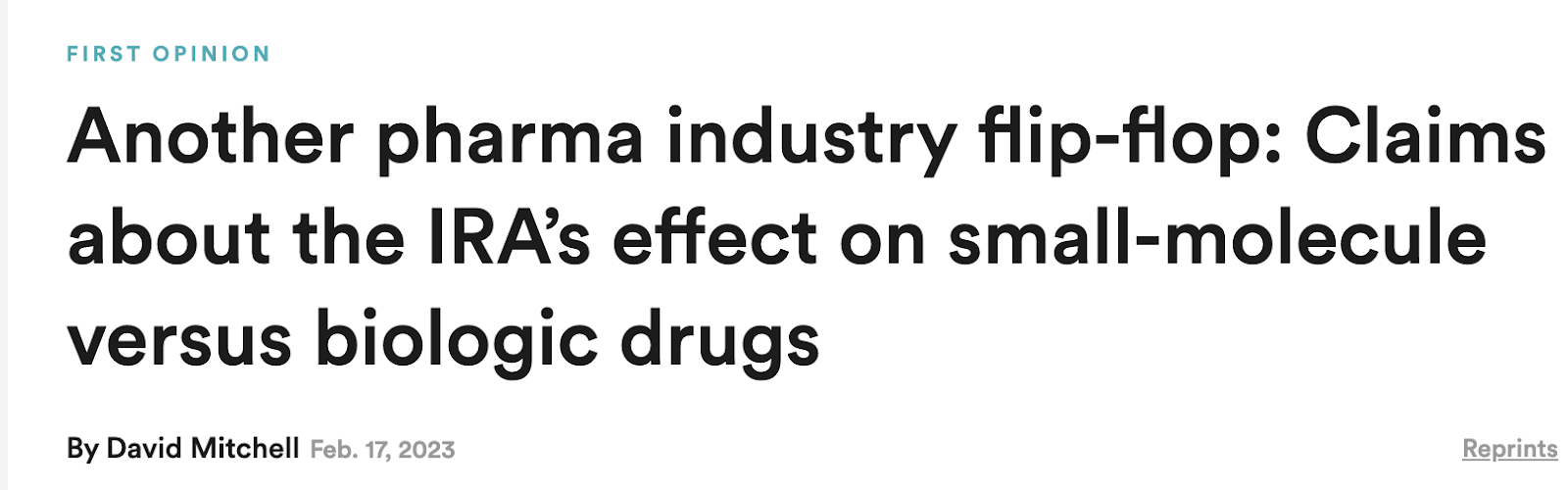
1. In a new STAT op-ed, P4ADNow’s David Mitchell debunked one of Big Pharma’s newest lies: that the drug price reforms in the Inflation Reduction Act economically disadvantage small molecule drugs compared to biologics, which will hurt innovation, increase prices, and harm patients. “The Inflation Reduction Act actually narrowsthe advantage for biologics over small molecules,” David explained. “It’s time for the pharmaceutical industry to choose: Do biologics need more market incentives than small molecules, or not? If pharma wants equal incentives for all drugs, Congress should bring biologics in line with small molecules and equalize them both at no more than nine years of exemption from negotiation.”
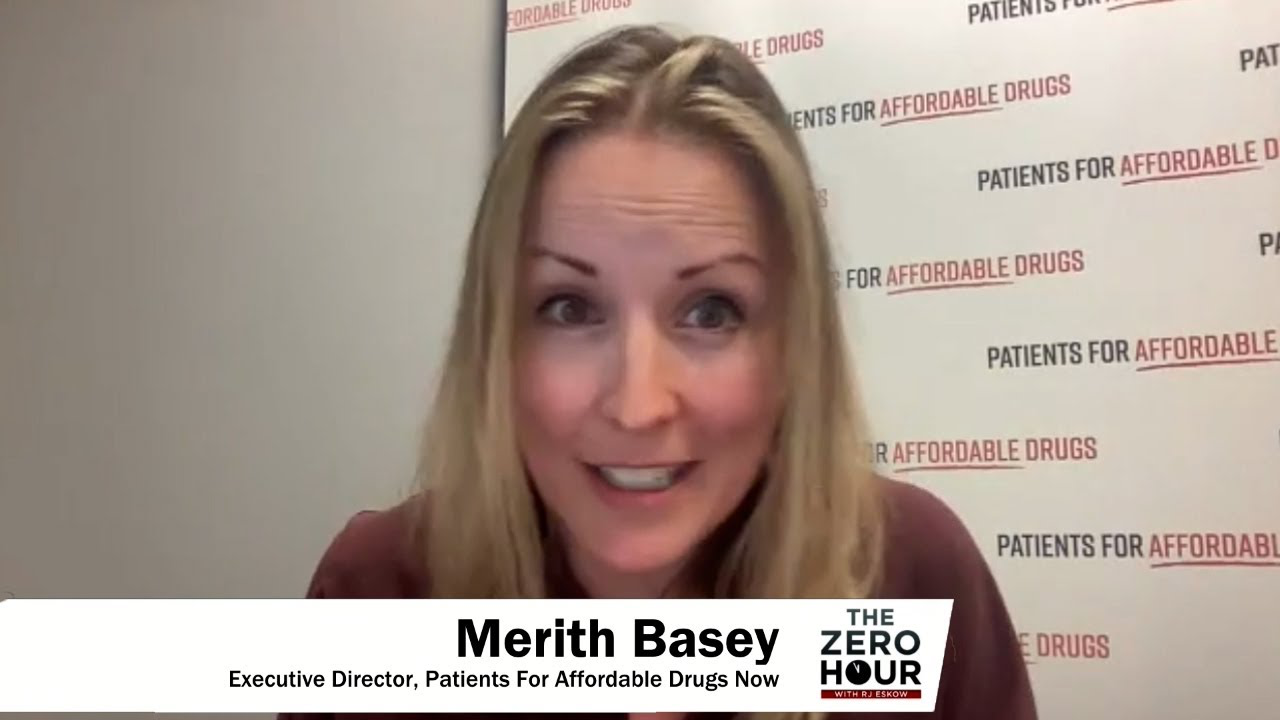
2. Merith Basey, P4ADNow’s executive director, sat down with health and policy expert RJ Eskow on The Zero Hour and discussed the drug price reforms in the Inflation Reduction Act, the fight to push back on Big Pharma power, and the work to be done to increase competition, transparency, and equity in the drug price system. “Headlines in the summer… said ‘maybe for the first time pharma is losing its power in Washington’ – that is music to my ears!” Merith shared about the passing of the historic Inflation Reduction Act. “People are excited about these reforms. Do they go far enough? No… We will continue pushing for patients.”
3. North Carolina advocate Steven Hadfield shared his perspective with Cardinal&Pine about how the $35 monthly insulin copay cap for people on Medicare passed in the Inflation Reduction Act will benefit him this year. “I think that’s gonna be real good,” Steven said of the new insulin copays that went into place last month. “I live on budgets. I mean, I’m not making the money I used to make… [this] stuff should not be so expensive.”