Welcome to the Week in Review.
1. New Patient Ads: “It’s Time To Get It Done”
2. Undeniable Momentum
3. Tweetorial: Unaffordable Cancer Drugs
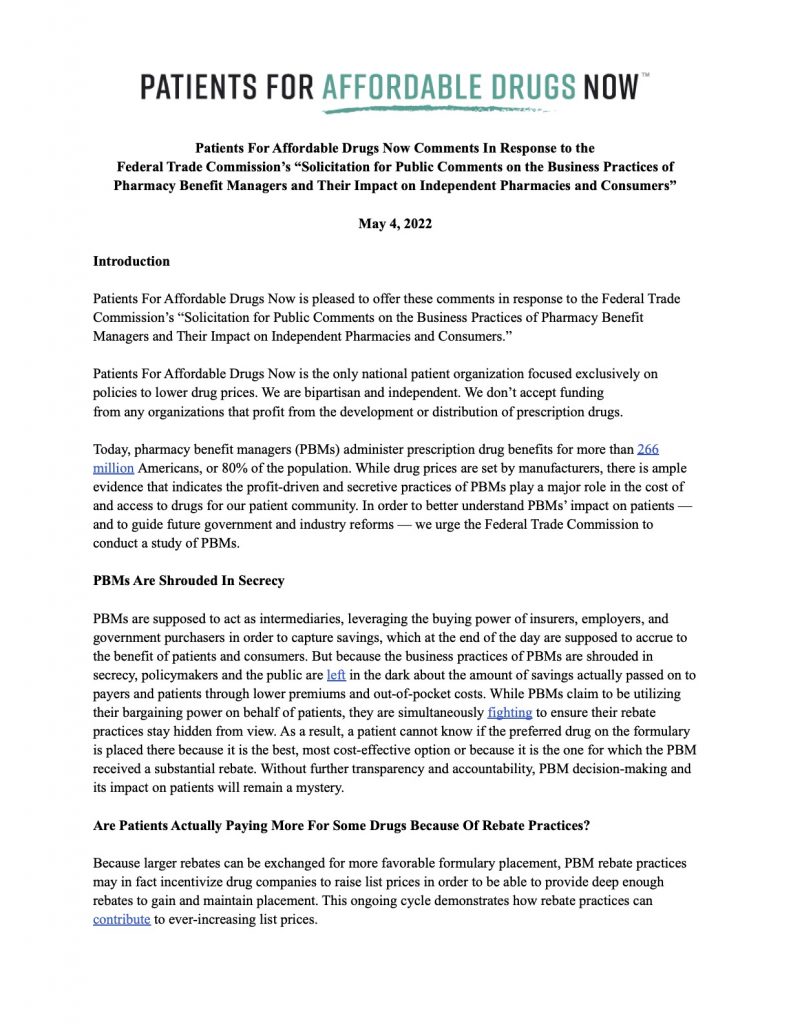
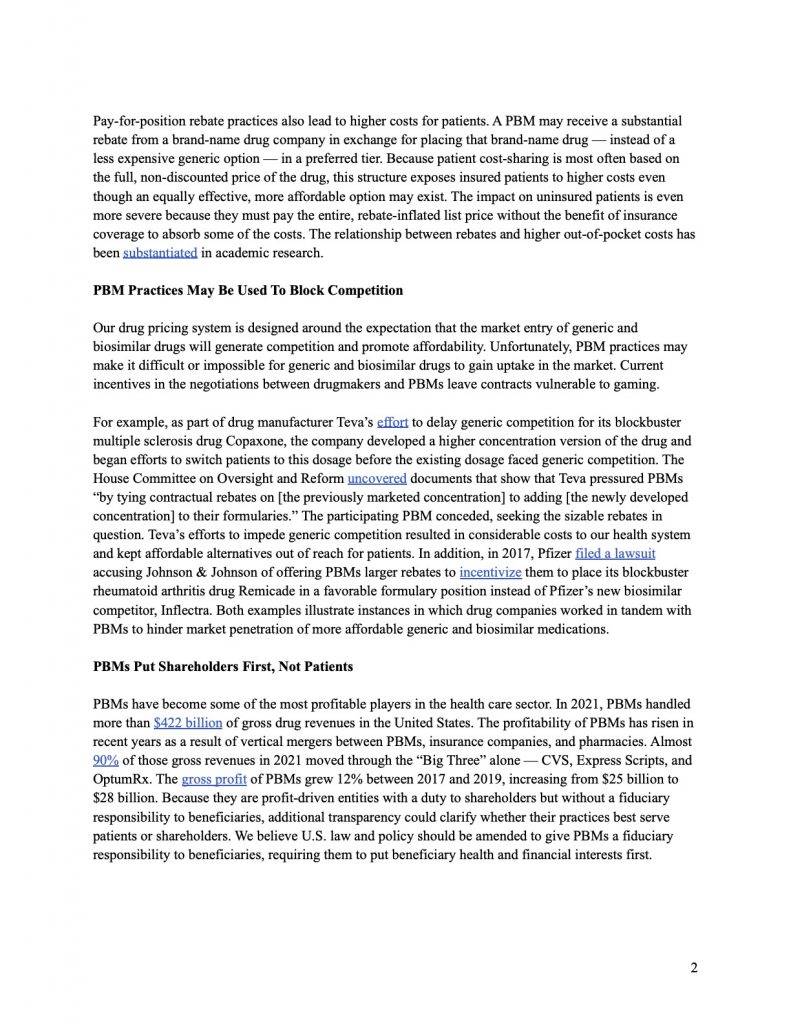
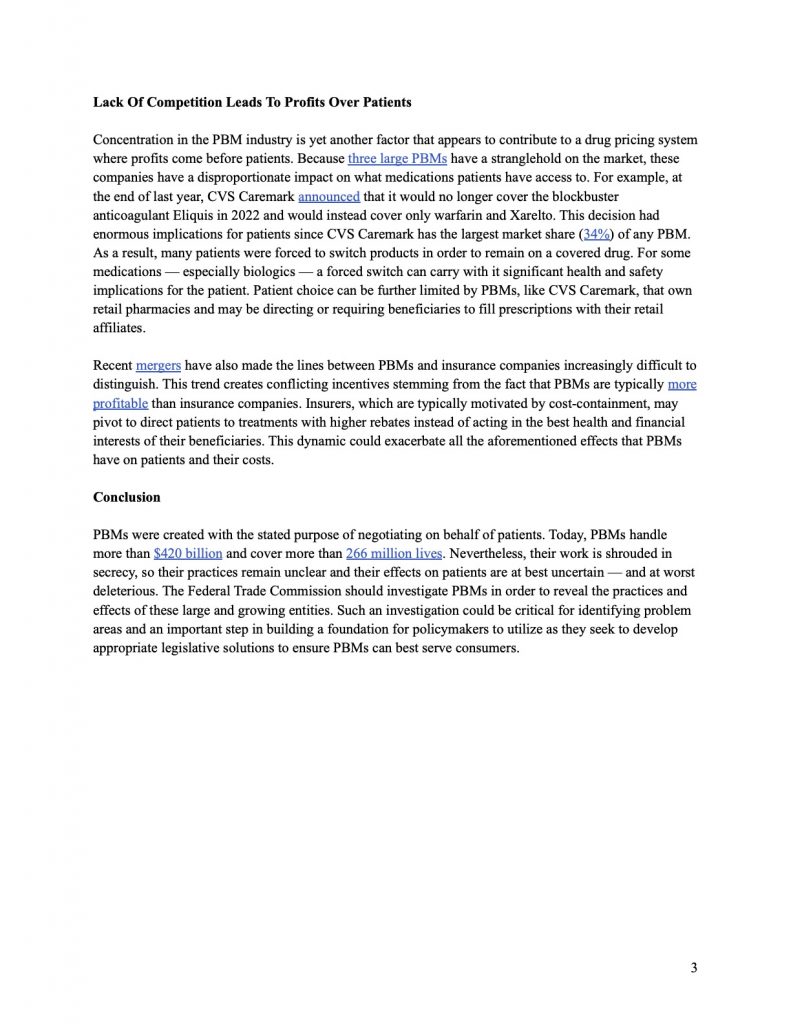
One more thing: P4ADNow submitted comments to the Federal Trade Commission (FTC) this week describing the ways that the opaque business practices of pharmacy benefit managers (PBMs) may contribute to higher prices for patients and calling for a thoroughgoing investigation into PBM business practices.
Have a great weekend, everyone!
| The “Push For Lower Rx Prices” Calls For Meaningful Progress On Comprehensive Drug Pricing Reforms By Memorial Day |
WASHINGTON, D.C. — Patients For Affordable Drugs Now launched a six-figure ad campaign today as part of the “Push For Lower Rx Prices.” The two new video ads feature patients who have struggled with the high prices of their prescription drugs calling on Congress to pass comprehensive reforms, including Medicare negotiation. Jacqueline Garibay is a college student from Austin, Texas, and lives with ankylosing spondylitis, and Lisa McRipley of Detroit lives with multiple sclerosis. The 30-second videos are running on digital platforms in Washington, D.C., this month. Today’s announcement is part of a larger campaign launched by P4ADNow and more than 70 other organizations last week pressing the Senate to make meaningful progress on comprehensive drug pricing reforms, including Medicare negotiation, by Memorial Day. As a part of the campaign, P4ADNow is also driving grassroots advocacy in key states, where patients call and write their senators to ask for their support advancing the drug price provisions through reconciliation.
“Americans are demanding that Congress deliver on its promises to lower drug prices. Eighty-three percent of voters back Medicare negotiation and 77 percent are in favor of limiting annual drug price increases, including support from large majorities of Democrats, Republicans, and independents,” said David Mitchell, a patient with incurable blood cancer whose drugs carry a list price of more than $900,000 per year and founder of Patients For Affordable Drugs Now. “The Senate has the power to deliver an unprecedented victory for Americans by passing comprehensive drug pricing reforms, including empowering Medicare to negotiate. It’s time to get it done.”
The first ad features Jacqueline Garibay, a college student and patient advocate who lives with ankylosing spondylitis, an autoimmune disorder that affects most of her major joints. “The last time we had to buy my medication, I decided to forgo it. We just couldn’t afford $6,000 a month,” Jacqueline of Austin, Texas, says in the ad. “If Congress doesn’t lower drug prices now, a whole ’nother generation of us will suffer.”
Watch Jacqueline’s ad here.
The second ad features Lisa McRipley, a patient advocate for P4ADNow and the National Multiple Sclerosis Society from Detroit. “The medication I need to treat my MS is nearly $7,500 a month. I’m on Medicare, and I still can’t afford that,” Lisa says in the ad, explaining that without her medication, her multiple sclerosis could progress irreversibly. “Congress can fix this. We can’t afford to wait. Please, Congress, let Medicare negotiate lower drug prices.”
Watch Lisa’s ad here.
“Lisa’s story is far too common among the nearly 1 million people living with MS in the United States. 40 percent of people with MS already don’t take their medications as prescribed due to cost,” said Bari Talente, executive vice president of advocacy and healthcare access at the National MS Society. “We call on Congress to pass comprehensive reforms to lower drug prices and increase access to medications as soon as possible. Lisa and many others can’t afford congressional inaction.”
The “Push For Lower Rx Prices” is supported by organizations representing patients, consumers, seniors, unions, small businesses, large employers, physicians, nurses, and disease advocacy groups.
The drug price provisions under consideration by the Senate will, for the first time, authorize Medicare to negotiate prices directly for some of the most expensive prescription medicines, including insulin; institute a hard cap on out-of-pocket drug costs for Medicare beneficiaries and limit copays on insulin for millions of Americans to $35 each month; and limit annual price increases to stop price gouging by drug corporations.
###
Our #1 overall pick to lower drug prices? Medicare negotiation.
Welcome to the Week in Review.
1. The Push For Lower Rx Prices
2. Voters Demand Medicare Negotiation
3. Read Our Stories
Have a great weekend, everyone!
| The Campaign Urges The Senate To Advance A Reconciliation Package That Includes Reforms Already Passed By The House |
WASHINGTON, D.C. — Over 70 organizations representing patients, consumers, seniors, unions, small businesses, large employers, physicians, nurses, and disease advocacy groups today launched the campaign “Push For Lower Rx Prices.” The campaign calls on the Senate to advance a reconciliation package by Memorial Day that includes the comprehensive drug price provisions already passed by the House of Representatives. Organizations will be engaging in activities to push this legislation forward, such as running digital and TV ads, driving constituent contact to Capitol Hill, elevating patient stories, and organizing grassroots activities on social media to press the Senate to take action.
The campaign kicked off with a press conference on Capitol Hill. Speakers included Senators Amy Klobuchar (MN) and Catherine Cortez Masto (NV), patient advocates, and representatives from AARP, Patients For Affordable Drugs Now, Doctors for America, the National Multiple Sclerosis Society, the Purchaser Business Group on Health, and the Service Employees International Union (SEIU). Speaker quotes from the press conference are listed below.
“The moment for action is now. After years of promises to lower the prices of prescription drugs, voters are demanding elected officials follow through and pass meaningful reforms to fix the U.S. drug pricing system,” said David Mitchell, a patient with incurable blood cancer whose drugs carry a list price of more than $900,000 per year and founder of Patients For Affordable Drugs Now. “The House of Representatives has done its job by passing comprehensive reform, and the president has endorsed the package. It now falls to the Senate, through the reconciliation process, to enact the policies. The votes are there for this historic legislation, which will change the trajectory of drug prices in the United States and finally put patients first.”
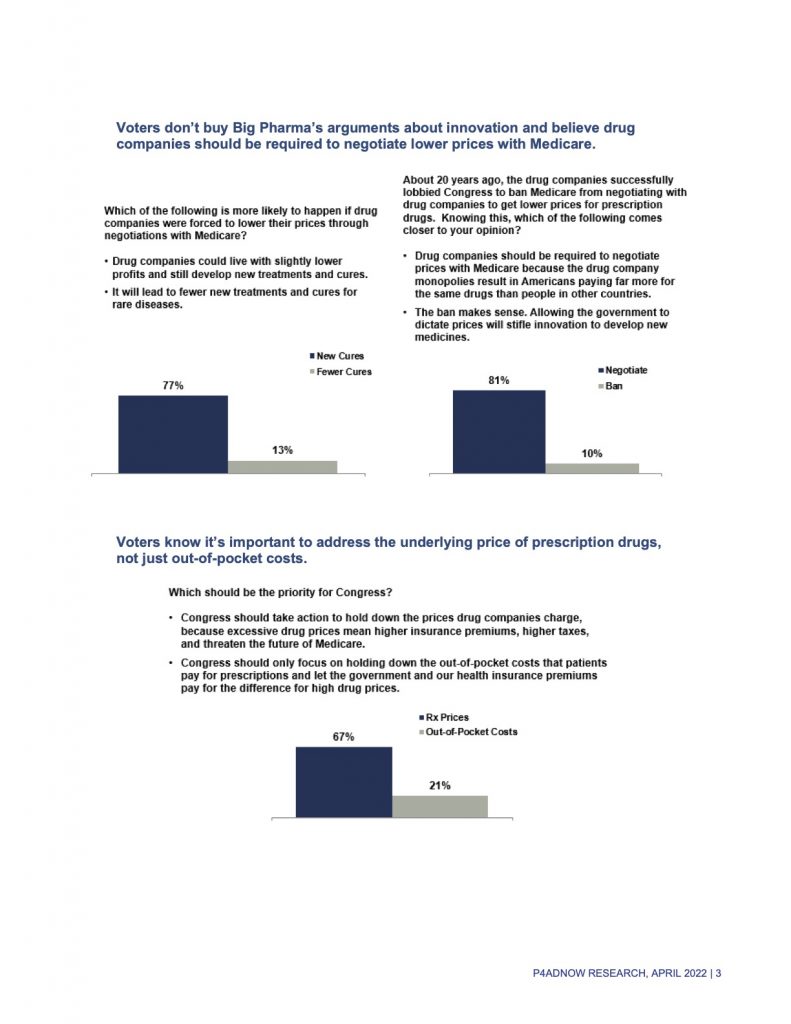
A new national survey was also released today that demonstrates overwhelming bipartisan voter support for comprehensive drug pricing reform, including 83 percent of voters who back Medicare negotiation and 77 percent in favor of limiting annual drug price increases. Results also show that nearly 80 percent know the pharmaceutical industry can live with slightly lower profits and still provide the true innovation patients need, and 67 percent want Congress to take action to lower prices set by drug companies, not just to reduce out-of-pocket costs.
“Giving Medicare the power to negotiate will save seniors and taxpayers hundreds of billions of dollars. American families cannot afford to lose that kind of money due to high drug prices,” said Jo Ann Jenkins, CEO of AARP. “AARP is fully committed to this fight and we won’t stop until we get relief for older Americans. Today we are calling on Congress to make this a priority for action now. It’s time to get this done!”
The drug price provisions under consideration by the Senate will, for the first time, authorize Medicare to negotiate prices directly for some of the most expensive prescription medicines, including insulin; institute a hard cap on out-of-pocket drug costs for Medicare beneficiaries and limit copays on insulin for millions of Americans to $35 each month; and limit annual price increases to stop price gouging by drug corporations.
The following are quotes from the speakers at today’s press conference:
“It’s time for Congress to fulfill its promise to lower the amount working families pay for prescription drugs,” said Bill Kramer, Executive Director for Health Policy at the Purchaser Business Group on Health. “Drug prices are already too high and are continuing to rise, bankrupting families, putting financial strain on businesses and dragging down the U.S. economy. Doing nothing is simply not an option. Policy solutions to lower drug costs must apply to all Americans in the name of fairness. The 180 million workers and families who receive health coverage through employers must not be left behind.”
“Six MS disease modifying treatments (DMTs) have increased in price more than 200% since coming on the market and people with MS face an out-of-pocket Medicare cost of more than $6,000 just for their MS DMT,” said Bari Talente, executive vice president of advocacy and healthcare access at the National MS Society. “Every day Congress delays, people with MS make the difficult decision to stop taking their medication due to cost and risk disease progression from which they won’t recover.”
“It is unacceptable that in a nation as wealthy as ours, 1 in 4 people have difficulty affording their prescriptions and we allow people to die because they do not have the money to pay for their lifesaving medicines. A person should never be forced to choose between buying the insulin they need to stay alive and keeping a roof over their head or food on the table for their families,” said Rita K. Kuwahara, MD, MIH and a national leader at Doctors for America. “Essential medicines such as insulin should be accessible and affordable for all, and it is critical that we, as a nation, commit to keeping families and communities healthy by guaranteeing that no one pays more than $35 dollars out-of-pocket per month for insulin, regardless of health insurance status. We must also ensure that every person has access to the medicines they need when they need them, regardless of finances, and allow Medicare to negotiate prescription drug prices, similar to how the Department of Veterans Affairs allows drug price negotiation. Congress must act now to make medicines affordable for all. Only once we ensure universal access to affordable lifesaving medicines will we begin to address existing health inequities and move towards improving the health of everyone in our nation.”
“People should not be forced to make the difficult decision between buying lifesaving medications or keeping the lights on. However, this is the sad reality faced by millions of working families of all races and occupations while pharmaceutical corporations enjoy making massive profits. That’s why SEIU members and retirees are urging Congressional lawmakers to put ideology and corporate interests aside and act to lower costs of prescription drugs. Our communities deserve a better deal,” said Valarie Long, Service Employees International Union (SEIU) International Executive Vice President.
“Lyrica is priced at over $850 for just one bottle. I need one to two bottles per month. I cannot afford that. So I made the very tough decision to go without it — forcing myself to live in pain, take less-than-ideal medications, go on disability, and retire early,” said Meg Jackson-Drage, a fibromyalgia patient and Medicare beneficiary from Utah. “We shouldn’t have to live in this reality. That is why I flew all the way from Salt Lake this week to come here and beg the Senate to finally deliver on its promise to bring relief to me and millions of Americans.”
“After graduating, I want to go to law school. But my dreams and independence are threatened by having to constantly worry about affording my treatment. I’m supposed to be studying at The George Washington University, but haven’t been able to attend college for the past year because of my pain. I shouldn’t have to choose between furthering my education and my mobility,” said Jacqueline Garibay, an ankylosing spondylitis patient from Texas. “I want the Senate to understand that passing comprehensive drug pricing reform will give me and millions of others peace of mind and the ability to pursue our dreams without worrying about whether the price of our drugs will stand in the way.”
A recording of the event can be viewed here, and photos are available upon request.
###
| Voters Don’t Buy Big Pharma’s Claims About Reduced Innovation; More Than 4 Out Of 5 Believe Drug Companies Should Be Required To Negotiate Lower Prices With Medicare |
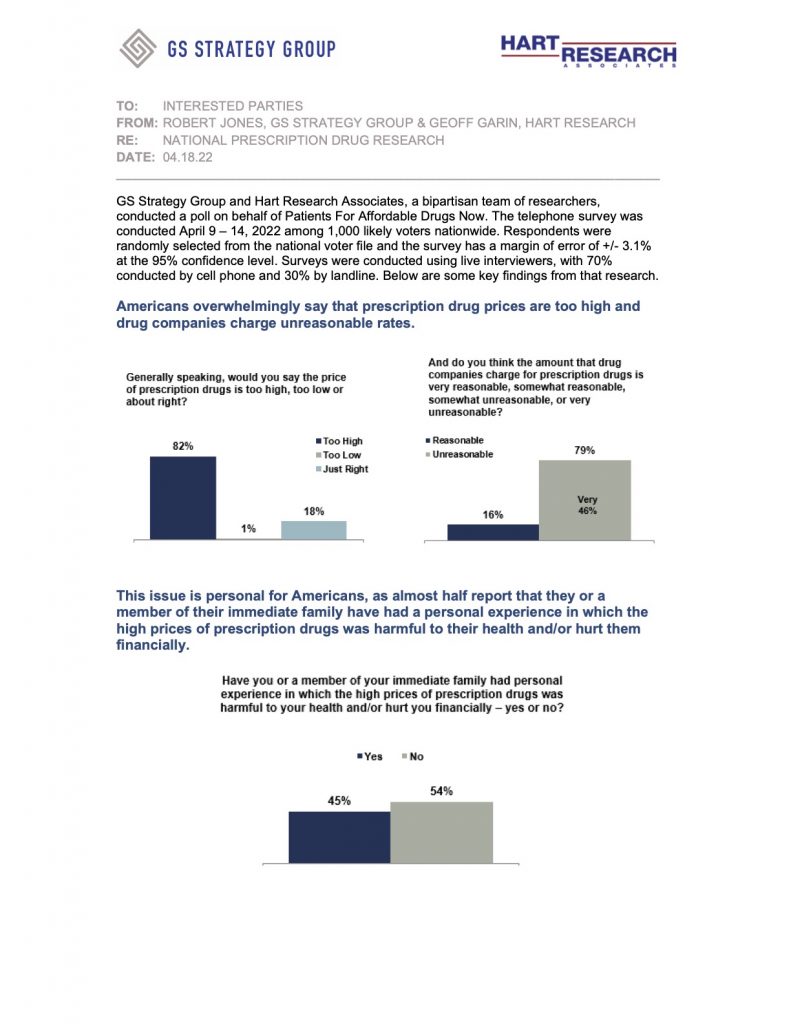
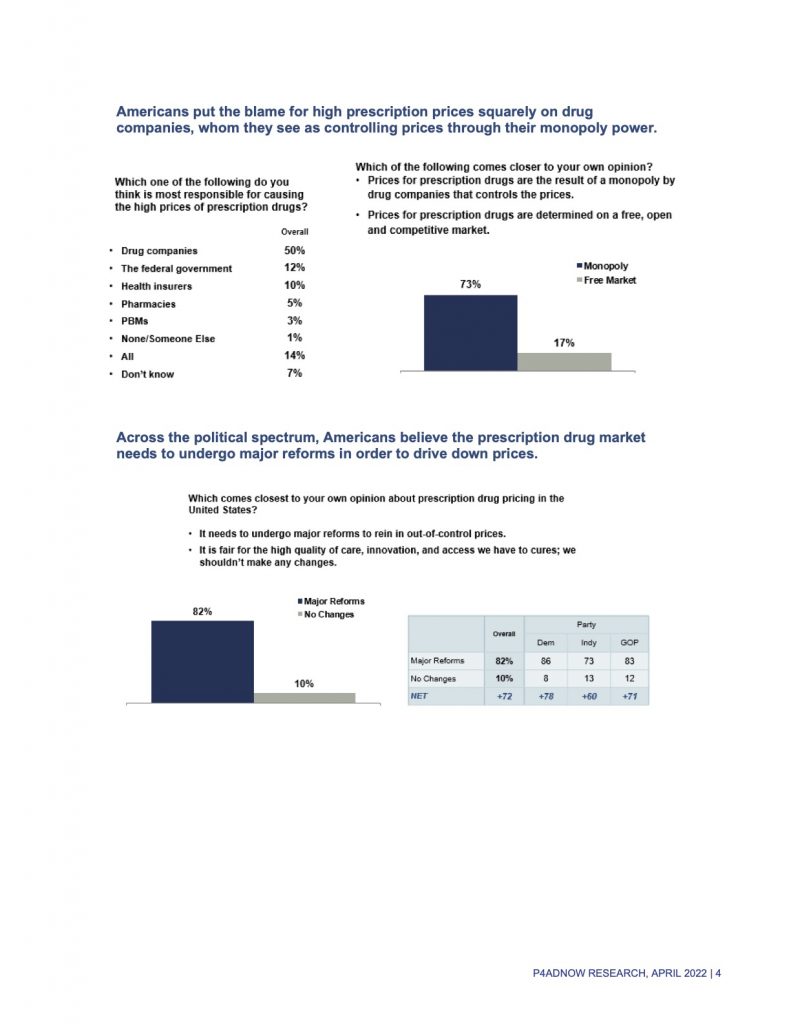
WASHINGTON, D.C. — A new national survey released today demonstrates overwhelming and unwavering support among voters for Congress to take action to lower the prices of prescription drugs, including allowing Medicare to negotiate lower prices and curbing drug company price hikes. The poll, conducted by the bipartisan research team GS Strategy Group and Hart Research Associates, finds that 83 percent of voters back Medicare negotiation and 77 percent are in favor of limiting annual drug price increases, including support from large majorities of Democrats, Republicans, and independents.
Poll results show that American voters do not buy Big Pharma’s arguments against drug pricing reform, as nearly 80 percent of respondents say the pharmaceutical industry can live with slightly lower profits and still provide the innovation patients need, and almost 7 out of 10 say Congress must take action to lower prices set by drug companies, not just to reduce out-of-pocket costs. The poll also demonstrates the urgency of the issue, with 85 percent of voters believing Congress should make lower prescription drug prices an important priority and nearly 90 percent believing Congress has not done enough to address the issue.
“While our country wrestles with deep divisions on so many issues, the overwhelming popularity of prescription drug pricing reforms — including the ones before the Senate right now — is striking,” said David Mitchell, a patient with incurable blood cancer whose drugs carry a list price of more than $900,000 per year and founder of Patients For Affordable Drugs Now. “This issue is deeply personal for Americans, with almost half saying they or a family member have suffered harm to their health or finances because of high drug prices. The Senate can deliver an unprecedented victory for the people of this country by passing comprehensive drug pricing reforms, including empowering Medicare to negotiate, but it must take action now. Americans can’t wait.”
This new poll was released in tandem with a campaign launch, “Push For Lower Rx Prices,” joined by over 70 organizations representing patients, consumers, seniors, unions, small businesses, large employers, physicians, nurses, and disease advocacy groups. The campaign calls on the Senate to make meaningful progress by Memorial Day on a reconciliation package that includes the comprehensive drug price provisions already passed by the House of Representatives.
The drug price provisions under consideration by the Senate will, for the first time, authorize Medicare to negotiate prices directly for some of the most expensive prescription medicines, including insulin; institute a hard cap on out-of-pocket drug costs for Medicare beneficiaries and limit copays on insulin for millions of Americans to $35 each month; and limit annual price increases to stop price gouging by drug corporations.
Read the full poll memo here.
###
| Over 70 Organizations Will Call On The Senate To Make Meaningful Progress On Comprehensive Drug Pricing Reforms By Memorial Day |
WASHINGTON, D.C. — Over 70 organizations representing patients, consumers, seniors, unions, small businesses, large employers, physicians, nurses, and disease advocacy groups will gather with Senator Klobuchar on Tuesday, April 26 at 11:00 AM ET to launch the campaign “Push For Lower Rx Prices.” The campaign calls on the Senate to advance a reconciliation package by Memorial Day that includes the drug price provisions already passed by the House of Representatives.
For a full list of all organizations that are part of the campaign, please contact Audrey Baker.
EVENT DETAILS:
To RSVP, please respond to Audrey Baker at [email protected]. There will be a Q&A section for press after the speakers conclude their remarks. Please note that masks will be strongly encouraged in order to protect our patient advocates.
*The press conference will also be available via livestream if you cannot attend in person.
###