POTUS Announcement — The State of GENEROUS and MFN
President Trump announced from the Oval Office that all 50 states have agreed to participate in the GENEROUS (GENErating cost Reductions fOr U.S. Medicaid) voluntary CMS model. But the announcement leaves significant questions unanswered. The administration has not disclosed which drugs are included, the prices Medicaid programs will pay, or the underlying deal terms needed to independently evaluate its savings projections, although the White House is claiming $64.3 billion in federal and state savings over the next decade. Medicaid already receives substantial statutory and supplemental rebates, and states can stick with previous agreements if they offer a better deal. Ultimately, the model’s success will depend not on how many states sign up, but on whether it delivers lower drug prices and improved access for patients on Medicaid — [White House, Semafor]
HHS Adviser Chris Klomp Faces Questions Over MFN Deals
Chris Klomp, the CMS Medicare Director who has played a key role in negotiating the administration’s MFN agreements with drugmakers, faced questions from two Senate committees this week as part of his Deputy HHS Secretary confirmation, with much of the scrutiny focused on the deals’ lack of transparency. Senator Wyden pressed Klomp over HHS Secretary Kennedy’s April commitment to provide Congress with the agreements, which have yet to be released, while Senator Warren pointed to drugmakers’ own statements that the deals are not expected to materially affect their financial outlook, and questioned what companies received in return. Klomp maintained that transparency is a core principle of the agreements, but their terms remain largely confidential, making it difficult to independently assess their impact. What has emerged publicly, including reports that some deals are structured to expire after three years and exclude key products, only adds to those concerns. The stakes of that opacity were underscored by a new study released the same week, which found that confidential exemption deals with an estimated 26 drugmakers could wipe out close to 80% of the Medicare savings projected under the administration’s GLOBE and GUARD models. A well-designed MFN policy has the potential to lower prices for patients, but voluntary time-limited agreements whose terms remain secret make it difficult to know whether these deals will deliver meaningful, lasting savings. — [P4AD, The Lancet]
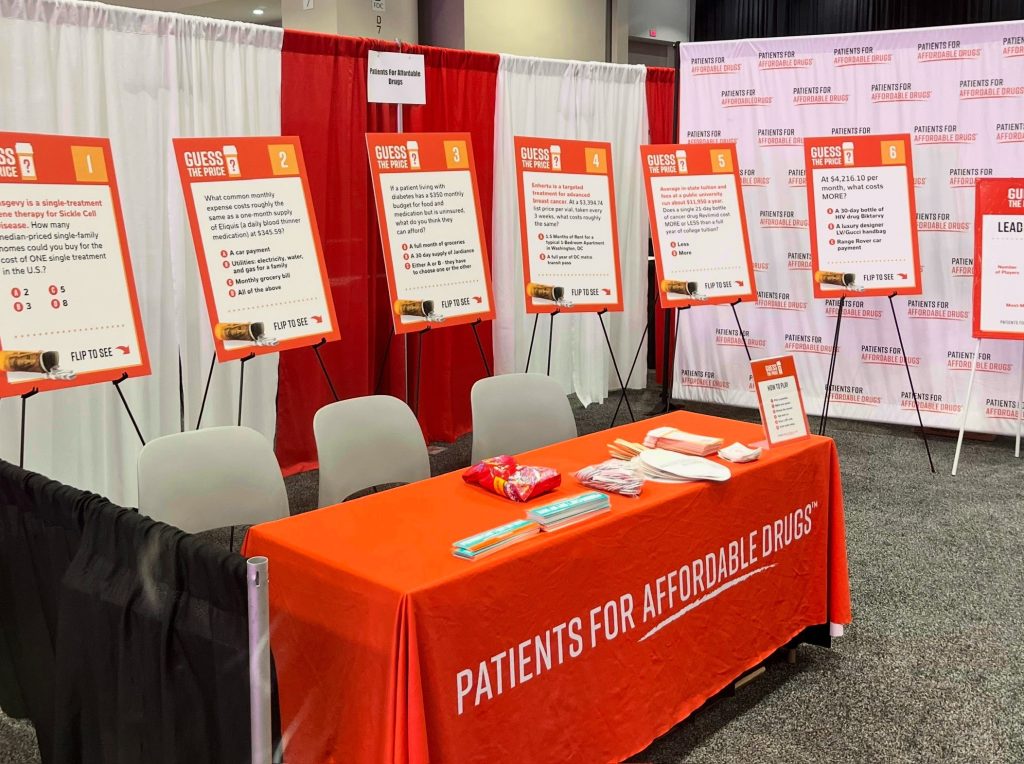
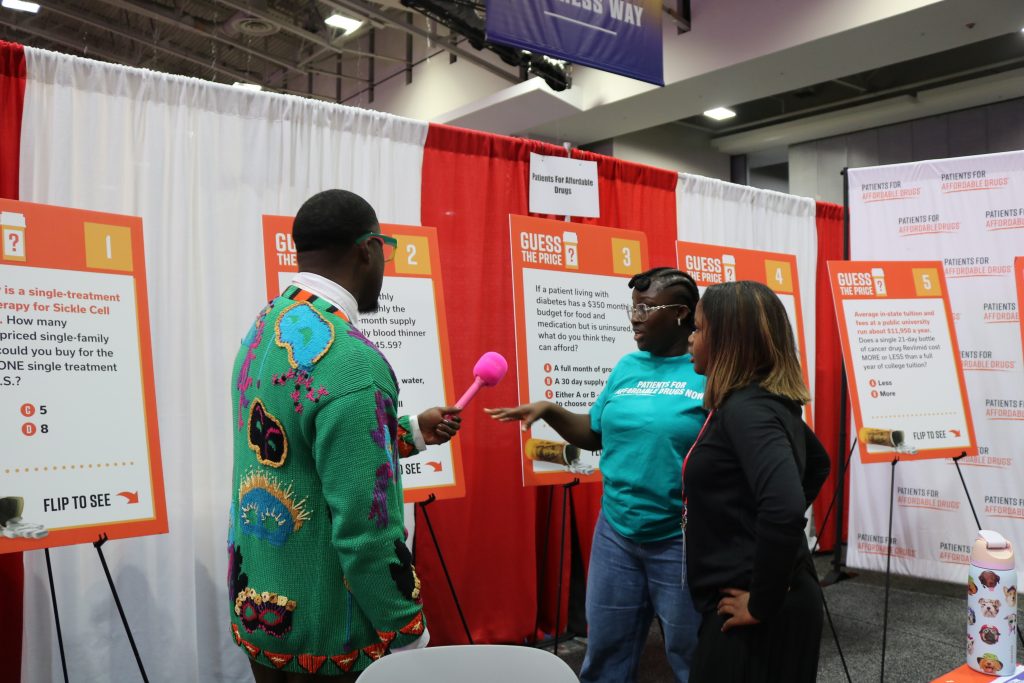
ICYMI: The Congressional Black Caucus Foundation’s 55th Annual Legislative Conference took place this week, and P4AD was there representing patients with our “Guess The Price” booth. With a heavy pharmaceutical industry presence at the conference including drugmakers like Merck and Vertex, we made sure patients’ perspective was represented, challenging attendees to guess the sky-high price of drugs like Entresto and Casgevy — a sickle cell treatment. How many can you get right?