
TrumpRx, 6 Months In
Six months after the TrumpRx platform launched, we’re getting a clearer picture of who the program is helping — and its limitations. The administration now suggests Americans have saved more than $700 million through TrumpRx and its broader most-favored-nation efforts, but has not yet released data to verify that figure.GoodRx, the primary technology partner for TrumpRx, reports that consumer demand via TrumpRx has so far been concentrated in weight-loss drugs, largely expanding access to new patients rather than shifting existing demand, with no material impact on its overall business. The feedback we’ve heard directly from patients in our community also points to significant limitations. In a P4AD survey conducted earlier this year, respondents frequently reported finding their medications listed on TrumpRx but being unable to use the discount, finding a lower price through their insurance or elsewhere, or still being unable to afford the discounted cash price. One patient told us, “TrumpRx offered the same deal available on the drug manufacturer’s website for people who pay out of pocket. That price is still too high for me.” TrumpRx may provide meaningful savings for some patients, but six months in, the available evidence reinforces the key distinction between offering another pathway to consumer discounts and taking steps to lower the prices of prescription drugs. TrumpRx cannot substitute for structural reforms that rein in drugmakers’ pricing power and reduce prices across the system. — [POLITICO, Fox Business, GoodRx]
P4AD Takes the Stage at Latino Health Summit
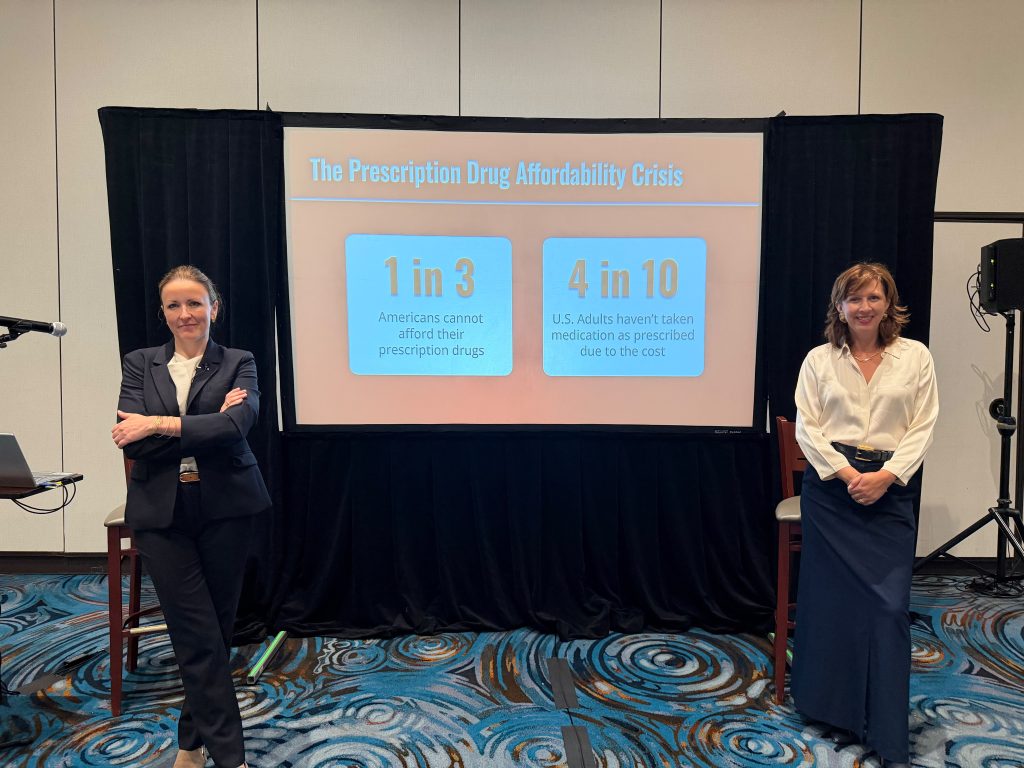
Yesterday, P4AD CEO Merith Basey alongside We Are Más founder Evelyn Pérez-Verdía presented at the Latino Health Summit on how high prescription drug prices are uniquely impacting Latino communities. The presentation highlighted how unaffordable medicines can lead to delayed care, skipped prescriptions, and difficult financial tradeoffs for families already facing disproportionate rates of chronic disease. Merith and Evelyn also discussed how deeper investment in and collaboration with Latino communities can help identify information gaps and combat disinformation around drug pricing and health care reforms.
Four Years of Historic Prescription Drug Price Reforms
Sunday marks four years since the Inflation Reduction Act was signed into law, delivering the most significant health care reforms in decades. Four years later, patients are experiencing the results: people on Medicare have a $2,100 annual out-of-pocket cap for their medications, a $35 monthly insulin cap, free recommended vaccines, and the first Medicare-negotiated drug prices have begun to save patients and taxpayers money this year, with additional rounds of negotiation underway. Negotiation and implementation of lower prices have now continued over two different administrations without interruption. This has culminated in the record sharpest drop in drug prices in more than 60 years, which experts attribute in large part to the Inflation Reduction Act. For patients like Rhonda of Conroe, Texas, whose husband takes Xarelto, these reforms have changed what it means to afford essential medication. Before the IRA, she says her husband would lose coverage for Xarelto near the end of each year and have to ask his doctor for samples to make it to January. “Very glad he can get the medication that he needs now,” Rhonda told us. At the same time, the pharmaceutical industry remains highly profitable, R&D investment continues, price hikes continue even with the IRA inflation rebates, and the biopharma market is seeing a surge in dealmaking — undermining years of industry lobbying spending and fearmongering that these reforms would come at the expense of innovation. The IRA proved that Congress can take on Big Pharma and lower drug prices without sacrificing the development of new treatments, but there’s still much more to be done. Now, lawmakers should build on that progress by expanding Medicare negotiation, increasing competition, and tackling the high launch prices that continue to put new medicines out of reach. — [P4AD, Endpoints]
Patient Advocate Spotlight: Kaye Peterson
Background: 67-year-old retired librarian from Lebanon, Kentucky
Condition: Type 1 Diabetes and Polyneuropathy
Drug: Lispro ($639.59 / vial), Lantus ($649.75 / vial), Midodrine ($185.99). Kaye pays $35 per vial for Lispro and Lantus, and Midodrine is covered by her insurance.
In her words:
“Even with good insurance coverage, prescription drug prices are still ridiculously high for patients who need them. A minor change in my insurance could leave me with soaring out-of-pocket costs.”
“I believe in lower prescription drug prices because I am way too tired to have to continue asking this question: How many people have to continue to die because they can’t afford their insulin and inhalers?”