
Welcome to the Week in Review.
Medicare’s GLP-1 Bridge Program Expands Access — But Has Limits
The administration’s GLP-1 “Bridge” program went into effect this week, offering eligible patients on Medicare access to weight loss drugs for $50 per month — marking the first time these treatments are covered for obesity alone. While CMS has not released an official estimate of how many people will qualify, KFF found that roughly 3.8 million beneficiaries would have met the program’s criteria based on 2023 data. For millions of older Americans, this represents a significant step forward, putting highly effective treatments within reach for the first time. At the same time, the program is temporary, does not count toward Medicare’s out-of-pocket cap, and was initially intended to transition into the broader BALANCE model, which remains delayed. GLP-1 drugs continue to cost far more in the U.S. than abroad, highlighting the need for longer-term solutions — but for now, the Bridge program offers meaningful, if limited, relief to some older patients who need it.— [AP, The Hill, USA Today, NBC News, ABC News, Barrons, STAT News]
GLOBE & GUARD Advance, But Questions Remain
CMS has sent the final GLOBE CMMI model rule to the Office of Management and Budget (OMB) for review, the last step before its public release, while its companion model, GUARD, has been under review since June 15th. This move signals that both models are moving from concept to implementation. However, key details remain about how they will function in practice. Reports that drugmakers may be able to avoid participation by entering into voluntary most-favored-nation (MFN) agreements raise uncertainty about whether these models will function as meaningful policy initiatives that will lower costs for patients, or primarily serve as leverage to drive MFN deals. P4ADNow has submitted comments on both of the proposed GLOBE and GUARD models, and we’ll continue to monitor their progression as details emerge. — [OMB, Inside Health Policy]
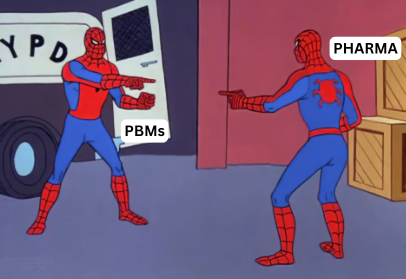
PBMs and Pharma Continue Pointing Fingers
Pharmacy Benefit Managers are ramping up lobbying spending following the recent passage of bipartisan PBM drug pricing reforms. Drugmakers have spent millions pushing the narrative that middlemen are the primary driver of high drug prices. That messaging push has gained traction, and PBMs are responding with increased advocacy of their own. While PBMs’ opaque and profit-driven practices play a significant role in patients’ access and costs, drug prices are ultimately set by manufacturers. The result is a system where powerful industry players continue to shift blame, while patients face the consequences of high and rising prices. Meaningful reform will require addressing the full system — starting with the pricing power of drugmakers — to deliver lower costs for patients. — [The Hill, P4AD, Congress]
Patient Advocate Spotlight: Josh Swatosh
Condition: Blind, Epilepsy, Cerebral Palsy, Severe Asthma, and Sleep Apnea
Background: 46 year-old patient advocate from Austin, Texas
In His Words: “It’s really been a pain when having to change medications fairly regularly… we should all have more affordable prescription drug prices, as I feel it is not right that drug companies are bringing in massive profits when it does not cost them near what they want you to think it does to manufacture these medications.”
Subscribe to the WEEK IN REVIEW here.